
Blog
What Makes Alpine Wellness Different from Spa Tourism?
What makes Alpine wellness different from spa tourism comes down to setting as much as treatment: where conventional spa tourism can happen almost anywhere with the right facilities — a city hotel, a resort by the sea, a purpose-built wellness complex — Alpine wellness is defined by its dependence on mountain terrain, altitude, and the surrounding natural environment as active parts of the experience rather than a scenic backdrop. In Switzerland, this distinction shows up clearly in how wellness retreats in the Alps are designed, from thermal baths built directly into mountainsides to treatment philosophies that draw on altitude, glacial water, and Alpine herbs rather than the more standardised spa menus found elsewhere.
This guide breaks down the specific differences between Alpine wellness and conventional spa tourism, and what travelers should expect from each when planning a wellness-focused trip to Switzerland.
The Role of Setting and Altitude
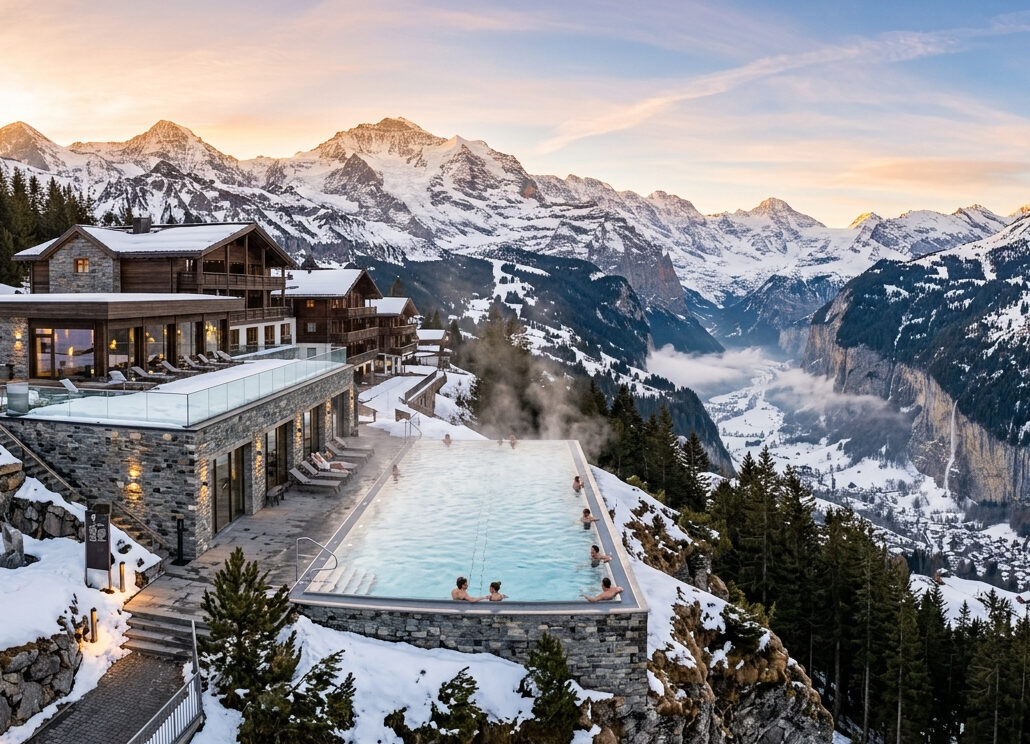
The most immediate difference in what makes Alpine wellness different from spa tourism is the physical setting itself. A standard spa can deliver a comparable menu of massages and facials regardless of location, but Alpine wellness facilities are built around their mountain context — thermal pools with views across a valley, outdoor terraces positioned to catch alpenglow at sunset, or saunas positioned to look directly onto a glacier. Altitude plays a functional role too: many Alpine wellness destinations sit between 1,000 and 2,000 metres, and some proponents point to altitude’s effects on circulation and sleep as part of the broader wellness experience, distinct from anything a sea-level spa can replicate.
This setting-dependence means Alpine wellness can’t be fully separated from its location the way a conventional spa treatment can. The mountain itself is part of the offering.
Nature-Based Treatments and Local Ingredients
Where conventional spa tourism often relies on a fairly standardised international menu — hot stone massages, generic aromatherapy blends, imported spa product lines — Alpine wellness tends to lean into ingredients and practices tied specifically to the mountain environment. Treatments built around Alpine herbs, hay bathing (a traditional Swiss practice using fermented mountain hay for its warmth and reputed therapeutic properties), and glacial or spring water sourced directly from the surrounding mountains are common features of Swiss Alpine wellness centres in a way they simply aren’t at a typical city or resort spa.
This ingredient-led approach also connects Alpine wellness more closely to the region’s farming and herbal traditions, giving treatments a sense of place that a generic international spa menu doesn’t offer.
Thermal Baths Built into the Landscape
One of the clearest physical differences in what makes Alpine wellness different from spa tourism is architecture. Switzerland’s most well-known thermal complexes, such as those found in Leukerbad and Vals, are built specifically to integrate with their mountain surroundings — outdoor thermal pools positioned to frame valley or peak views, and in some cases, architecturally significant buildings designed by internationally recognised architects specifically around the character of the stone and water on site. Conventional spa tourism, by contrast, more often takes place in interior wellness suites within a hotel, without the same architectural relationship to the surrounding landscape.
For many visitors, the experience of soaking in an outdoor thermal pool with snow on the surrounding peaks, even in winter, is the single most distinctive part of Alpine wellness compared to a standard hotel spa circuit.
Movement and the Outdoors as Part of Wellness
Alpine wellness in Switzerland frequently extends beyond treatment rooms and pools to include structured outdoor movement — guided hikes, forest bathing walks, snowshoeing, or yoga sessions held on mountain terraces — positioning physical activity in the landscape as part of the wellness offering rather than a separate leisure activity. Conventional spa tourism tends to keep movement and treatment more separate, with fitness facilities and spa services offered as distinct, parallel amenities rather than integrated into a single wellness philosophy.
This blending of movement, nature exposure, and treatment reflects a broader Alpine wellness principle: that the benefits of the mountain environment come from active engagement with it, not just proximity to a scenic view.
Seasonal Character: Winter Versus Year-Round Spa Culture
Alpine wellness also carries a distinctly seasonal identity that conventional spa tourism generally doesn’t share. Many of the most iconic Alpine wellness experiences — soaking in an outdoor thermal pool while snow falls, warming up after a day of skiing, or watching alpenglow settle over snow-capped peaks from a heated terrace — are specifically tied to winter and the contrast between cold mountain air and warm water. Summer Alpine wellness leans more heavily into the hiking and forest-bathing side of the offering, giving the experience a genuinely different character across seasons.
Conventional spa tourism, particularly in city or resort settings, tends to offer a more consistent year-round experience regardless of season, since it isn’t built around a specific climate or landscape the way Alpine wellness is.
Choosing Between the Two for a Swiss Trip
For travelers deciding between an Alpine wellness retreat and a more conventional spa stay in Switzerland, the choice largely comes down to what’s driving the trip. Visitors who want the mountain landscape itself to be central to the experience — outdoor thermal pools, herbal treatments tied to the region, guided nature walks — are better served by a dedicated Alpine wellness destination in resorts like Leukerbad, Vals, or the wellness hotels scattered through the Bernese Oberland and Valais. Travelers who want a more conventional, reliably consistent spa experience as one part of a broader city stay may find a standard hotel spa in Zurich, Geneva, or Basel a better fit, without the need to travel specifically for the setting.
Many visitors end up combining both: a city-based trip with a standard hotel spa day, paired with a separate excursion or overnight stay at a dedicated Alpine wellness destination for the more landscape-driven experience.
Getting to Switzerland’s Alpine Wellness Destinations
Because many of Switzerland’s best-known Alpine wellness centres sit in smaller mountain villages rather than major cities, reaching them comfortably often takes more planning than a typical spa day. Leukerbad and Vals, for example, both involve a drive through mountain roads from the nearest train connections, which can be a less relaxing start to a wellness trip if it involves navigating unfamiliar routes or parking. A private transfer from Geneva, Zurich, or a nearby city removes this step, allowing the trip to begin unwinding from the moment of pickup rather than after arrival.
This is particularly relevant for winter visits, when snow and reduced daylight can make self-driving to smaller Alpine villages less appealing than a pre-arranged, door-to-door transfer.
Premium Private Chauffeur Across Switzerland
From scenic mountain tours to airport transfers and VIP events, enjoy custom luxury rides tailored to your itinerary.
FAQ: Alpine Wellness
Is Alpine wellness more expensive than conventional spa tourism?
Pricing varies widely on both sides, but destination Alpine wellness resorts with architecturally significant thermal complexes, such as Vals, can command premium pricing tied to their setting, while conventional hotel spas in cities vary more by hotel tier than by wellness philosophy.
What is hay bathing, and is it unique to Alpine wellness?
Hay bathing is a traditional Swiss Alpine practice using fermented mountain hay for its warmth and reputed therapeutic effects, and it’s specific to the Alpine wellness tradition rather than something found in conventional spa menus.
Do you need to be an experienced hiker to enjoy Alpine wellness?
No. Many Alpine wellness offerings, including thermal baths and guided walks, are designed for a range of fitness levels, with gentler nature walks alongside more demanding hiking options.
What is the best season for Alpine wellness in Switzerland?
Winter is often considered the most distinctive season, thanks to the contrast between cold mountain air and warm thermal water, though summer offers a different, hiking- and nature-focused version of the same experience.
What makes Alpine wellness different from spa tourism ultimately comes down to how inseparable the experience is from its mountain setting — the altitude, the architecture built to frame the landscape, the ingredients drawn from the surrounding valleys, and the seasonal character that shifts between winter thermal soaking and summer forest walks.
Conventional spa tourism can deliver comparable treatments almost anywhere, but Alpine wellness depends on the mountains themselves being part of the offering. For travelers planning a Swiss wellness trip, deciding which experience matters more is largely a question of whether the landscape itself is the point.


